

- Diplomatie
In English
Lomé balances East and West as Gnassingbé holds talks in Moscow
Faure Gnassingbé arrived in Moscow on Tuesday for a two-day official visit, with a high-profile meeting scheduled on Wednesday with Russian President Vladimir Putin.
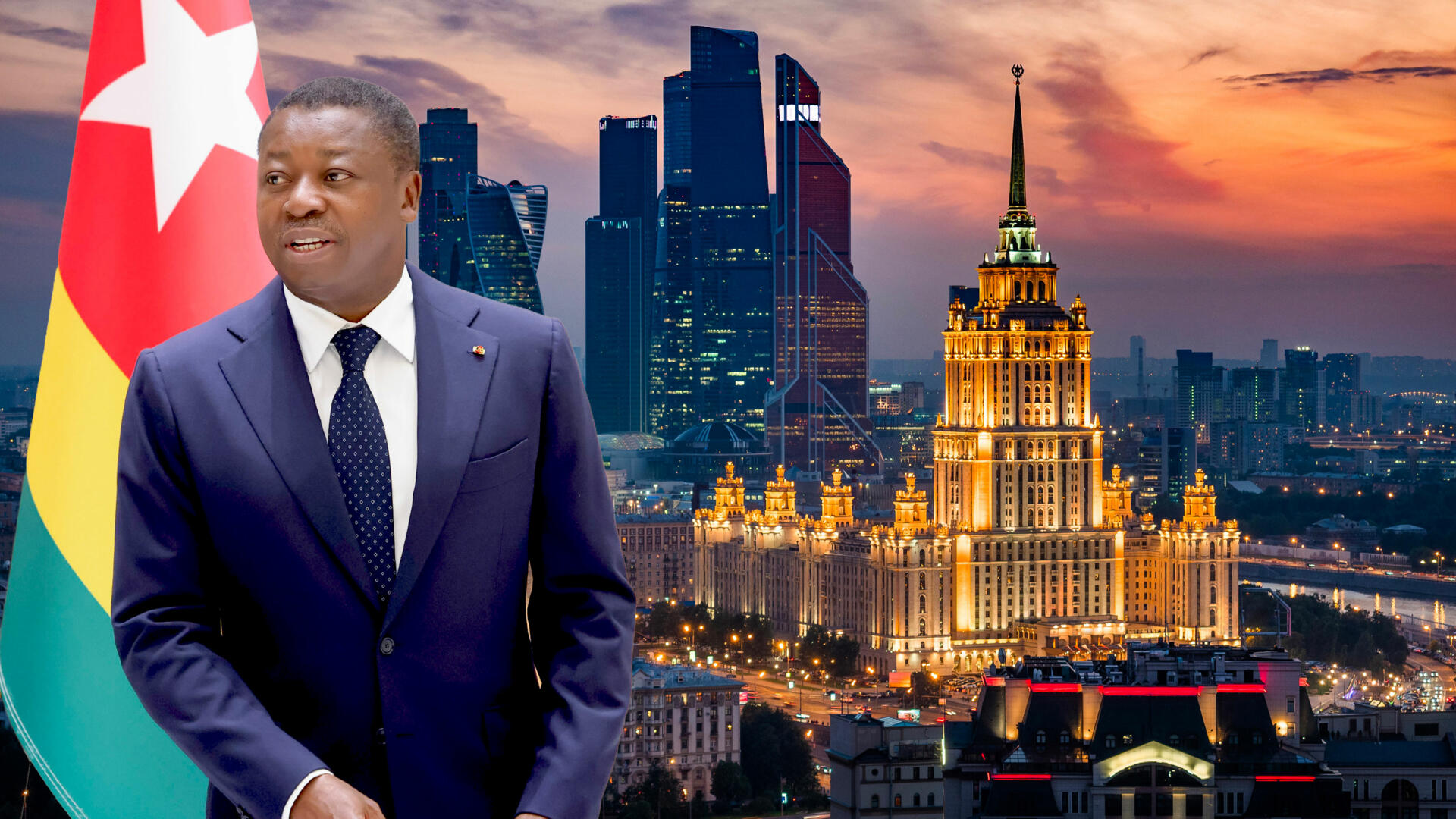
Faure Gnassingbé arrived in Moscow on Tuesday for a two-day official visit, with a high-profile meeting scheduled on Wednesday with Russian President Vladimir Putin.
The trip, taking place against a backdrop of heightened geopolitical tensions, has drawn considerable attention in Lomé and among Western diplomatic missions.
The visit comes at a delicate moment: Russia’s military offensive in Ukraine has intensified in recent weeks, with no credible prospect of a ceasefire. In this climate, the Togolese leader’s decision to engage directly with the Kremlin reflects both the country’s traditional diplomatic posture and its strategic calculus.
A Tradition of Open Dialogue
Officials close to President Gnassingbé emphasize that the démarche is consistent with Togo’s long-standing approach to foreign policy.
“Togo speaks with all partners, without ideological exclusivity,” government sources reiterate. From the European Union and the United States to China, Turkey, Gulf states and Russia, Togo maintains diversified channels of engagement.
“Dialogue generates solutions,” Togolese diplomats insist.
This policy — often described as active non-alignment — has been a hallmark of Gnassingbé’s leadership since 2005. Lomé has hosted major Africa-EU summits as well as cooperation forums with China and Russia, positioning itself as a platform for diplomatic mediation. In an era increasingly defined as a new “Cold War” between the West and the Russia-China axis, Togo refuses to take sides.
According to Togolese and Russian sources, the talks in Moscow will focus on three priority domains:
Although trade between Togo and Russia remains modest — estimated at around USD 120 million in 2024 — Moscow is showing growing interest in the Lomé deep-water port, a critical West African logistics hub, and in the country’s phosphate reserves. Additional cooperation prospects include civil nuclear energy (via Russia’s Rosatom), infrastructure development, and agriculture.
Faure Gnassingbé is expected to raise the war in Ukraine and its substantial repercussions on grain and fertilizer prices across West Africa. Like many African nations, Togo has refrained from explicitly condemning Russia at the United Nations, instead calling for a negotiated and sustainable solution to the conflict.
Security Challenges in the Sahel and West Africa
Security will be at the heart of discussions. Since 2021, Togo has faced jihadist incursions near its northern border with Burkina Faso, prompting the government to declare a security emergency in several regions.
Although the Togolese Armed Forces are primarily trained and equipped by France and the United States, Lomé is closely monitoring Russia’s expanding military footprint in the Sahel.
Following the withdrawal of French troops and the deployment of Russian instructors — formerly tied to Wagner, now operating under the “Africa Corps” structure — Mali, Burkina Faso and Niger have received helicopters, drones and electronic warfare systems. While these partnerships remain controversial, they have allowed Sahelian armies to regain ground in several theaters.
Togo, sharing more than 130 km of border with Burkina Faso, fears a spillover effect. “We need every possible partnership to protect our population,” a senior Togolese security official said anonymously. Discussions with Moscow about potential enhanced military cooperation are believed to be under way, though the country intends to preserve its long-standing ties with Paris and Washington.
Western Reactions: Caution and Concern
In Brussels and Washington, the visit is being watched with a mix of caution and unease. Togo remains a reliable Western partner — a former member of the UN Security Council (2022–23), a host of U.S. military exercises, and a beneficiary of French counterterrorism support.
Yet, as in many African capitals, pragmatism increasingly overrides geopolitical alignments. Leaders from Guinea, Senegal and Côte d’Ivoire have also deepened contacts with Moscow in recent months. Gnassingbé’s trip fits within this broader trend of strategic diversification.
A joint communiqué is expected on Wednesday evening. It should reaffirm Togo’s sovereign right to diversify its partnerships and call for a “more equitable world order” — language that carries precise meaning both in Lomé and in Moscow.
With this visit, Gnassingbé signals that Togo intends to navigate the shifting global landscape on its own terms, balancing traditional alliances with new strategic opportunities.
ARTICLES SUR LE MÊME THÈME
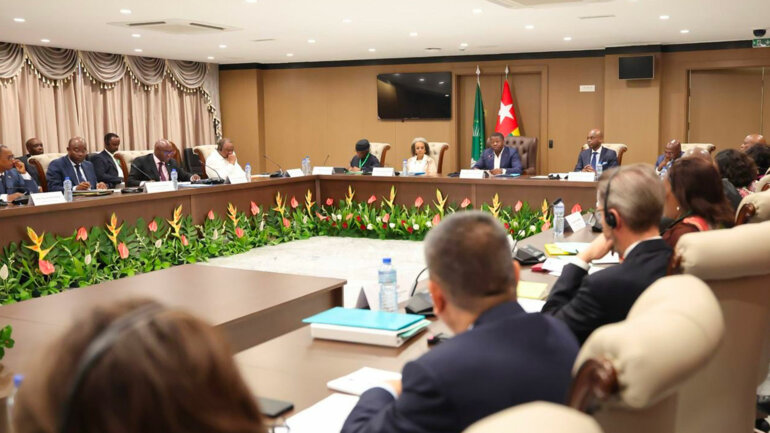
From words to action: Africa faces its peace test in Lomé
Meeting on Saturday in Lomé, African actors involved in the peace process in the Democratic Republic of the Congo and the Great Lakes region were confronted with a stark reality: the time for words has run out.
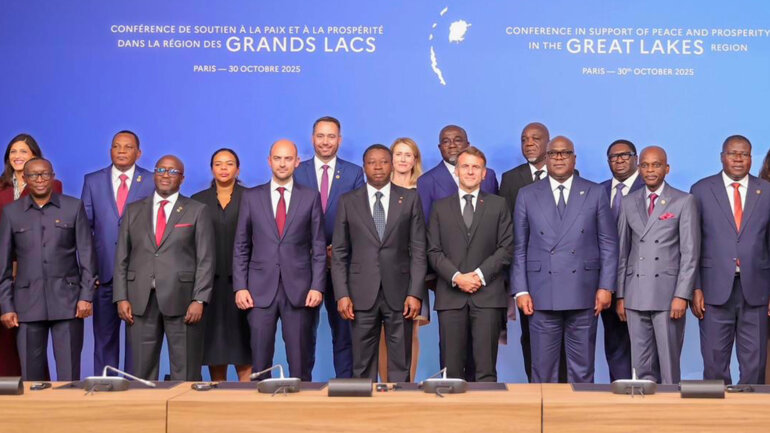
France and Togo unite for peace in the Great Lakes
At the International Conference for Peace and Prosperity in the Great Lakes Region, held on October 30 in Paris, more than €1.5 billion in aid was pledged to support vulnerable populations in the Democratic Republic of Congo (DRC).
Historic transition: Faure Gnassingbé leads Togo into parliamentary governance
In accordance with the new Constitution promulgated in May 2024, Faure Gnassingbé was officially appointed President of the Council on Saturday by the Togolese National Assembly during a plenary session.